
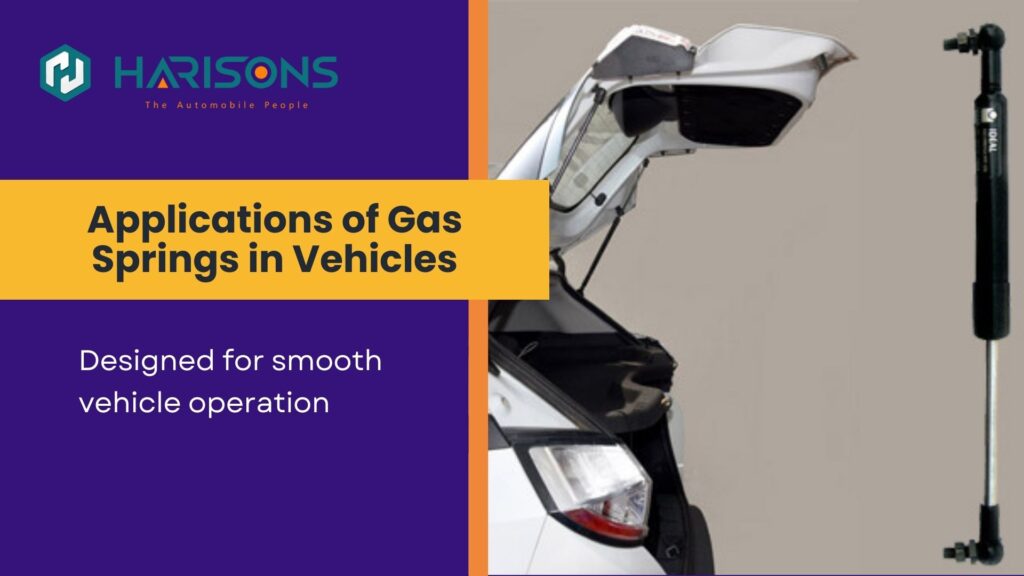
Gas springs play a vital role in modern vehicle design, offering a simple yet highly effective solution for controlled motion and support. The applications of gas springs have expanded significantly with the growing demand for comfort, safety, and convenience in automobiles. Commonly known as a gas strut, this component uses compressed gas to provide smooth lifting, holding, and damping functions in various parts of a vehicle.
From supporting hoods and tailgates to enabling precise seat adjustments, gas springs in vehicles contribute to both functionality and user experience. An automotive gas spring or automotive gas strut is designed to perform reliably under repeated use, varying loads, and changing environmental conditions. As a result, gas springs for cars have become an essential element in vehicle interiors and exteriors alike. Understanding gas spring applications and the importance of automotive gas springs helps highlight how these compact components enhance efficiency, safety, and comfort across today’s automotive industry.
Why Are Gas Springs Widely Used in the Automotive Industry?
Gas springs are widely used in the automotive industry because they provide a reliable balance of safety, controlled movement, and long-term performance. The applications of gas springs in modern vehicles go far beyond basic lifting functions, making them an essential component in both interior and exterior systems. A gas strut is designed to control motion smoothly, preventing sudden or uncontrolled movements that could cause injury or damage. This controlled operation is especially important for hoods, tailgates, and access panels, where safety and stability are critical. As a result, gas springs in vehicles help reduce the risk of accidental closing while ensuring consistent performance under repeated use.
In addition to safety, gas springs are valued for the convenience they offer to users. An automotive gas spring allows heavy components to be opened and held in place with minimal effort, improving ease of use for drivers and passengers. Whether used as a gas spring for cars in trunk lids, seats, or glove compartments, these components enhance comfort and accessibility. The durability of automotive gas springs also makes them ideal for long-term use, as they are built to withstand vibration, temperature changes, and frequent operation. Because of these advantages, gas spring applications continue to expand across the automotive sector, supporting safer designs, better user experience, and dependable vehicle performance.
Major Applications of Gas Springs in Vehicles
Gas springs are an integral part of modern vehicle engineering, offering controlled movement, support, and reliability across multiple systems. The applications of gas springs in automobiles continue to grow as manufacturers focus on safety, comfort, and efficient design. Below are the major gas spring applications commonly found in today’s vehicles.
- Hood and Bonnet Lifting Systems: One of the most common uses of a gas strut is in hood and bonnet lifting systems. Automotive gas springs allow the hood to open smoothly and remain securely in place during maintenance. This controlled motion improves safety while eliminating the need for manual support rods, making gas springs in vehicles a practical and user-friendly solution.
- Tailgates and Trunk Systems: Tailgates and trunk lids rely heavily on automotive gas struts for smooth opening and controlled closing. A gas spring for cars reduces the effort required to lift heavy panels and prevents sudden drops. These automotive gas springs enhance convenience and ensure reliable operation in sedans, hatchbacks, SUVs, and commercial vehicles.
- Seating Adjustment Mechanisms: Gas springs are widely used in seat height adjustment, reclining functions, and folding seat systems. An automotive gas spring enables precise movement and stable positioning, allowing drivers and passengers to customise seating comfortably. These gas springs in vehicles contribute to improved ergonomics and driving comfort.
- Convertible Roof and Access Systems: Convertible roofs and access panels use gas springs to assist in lifting and positioning roof components. It helps manage weight and motion, reducing strain on motors and hinges. In such gas spring applications, smooth operation and durability are essential for long-term performance.
- Glove Boxes and Interior Storage Compartments: Interior components such as glove boxes, armrests, and storage lids often use small automotive gas springs. These gas springs ensure soft opening and controlled closing, preventing slamming and enhancing the overall interior quality of the vehicle.
- Rear Window and Hatch Systems: In certain vehicle designs, gas springs support rear windows and glass hatches. Automotive gas struts provide a stable holding force while allowing easy access to cargo areas, adding both safety and convenience.
- Commercial Vehicle Doors and Service Panels: Commercial vans and utility vehicles rely on heavy-duty gas springs in vehicles for cargo doors, service panels, and equipment covers. These automotive gas spring are designed for frequent use and higher loads, ensuring durability in demanding environments.
Therefore, the widespread applications of gas springs demonstrate their importance in modern vehicle design. Whether used for lifting, holding, or controlled movement, gas springs and automotive gas struts continue to improve safety, comfort, and functionality across a wide range of automotive systems.
Conclusion
In a nutshell, we can say that the applications of gas springs in the automotive industry highlight their importance in delivering safety, controlled motion, and everyday convenience across a wide range of vehicle systems. From hoods and tailgates to seating and access mechanisms, gas springs contribute to smoother operation, improved comfort, and reliable performance in modern vehicles.
Hence, choosing the right manufacturer is equally important, as consistency and engineering precision directly affect functionality and service life. Harisons India stands out for its focus on quality manufacturing, application-specific design, and dependable performance, making it a trusted choice for automotive gas springs where reliability and long-term value matter most.